
Showing posts with label Jerusalem. Show all posts
Showing posts with label Jerusalem. Show all posts
Saturday, June 4, 2016

Friday, April 8, 2016
Observations of 'Adrian Reland' of Palestine in 1695
Taken from Robert Spencer's Original Article, Israel's Voice

Adrian Reland's 3 most prominent conclusions in 1695 from his book 'Palestina', published by Trajecti Batavorum: Ex Libraria G. Brodelet, 1714
1. Not one settlement in the Land of Israel has a name that is of Arabic origin. Most of the settlement names originate in the Hebrew, Greek, Latin or Roman languages. In fact, till today, except to Ramlah, not one Arabic settlement has an original Arabic name. Till today, most of the settlements names are of Hebrew or Greek origin, the names distorted to senseless Arabic names. There is no meaning in Arabic to names such as Acco (Acre), Haifa, Jaffa, Nablus, Gaza, or Jenin and towns named Ramallah, El Halil and El-Kuds (Jerusalem) lack historical roots or Arabic philology. In 1696, the year Relandi toured the land, Ramallah, for instance, was called Bet’allah (From the Hebrew name Beit El) ...
2. Most of the land was empty, desolate.
Most of the land was empty, desolate, and the inhabitants few in number and mostly concentrate in the towns Jerusalem, Acco, Tzfat, Jaffa, Tiberius and Gaza. Most of the inhabitants were Jews and the rest Christians. There were few Muslims, mostly nomad Bedouins. Nablus, known as Shchem, was exceptional, where approximately 120 people, members of the Muslim Natsha family and approximately 70 Shomronites, lived.
In the Galilee capital, Nazareth, lived approximately 700 Christians and in Jerusalem approximately 5000 people, mostly Jews and some Christians.
The interesting part was that Relandi mentioned the Muslims as nomad Bedouins who arrived in the area as construction and agriculture labor reinforcement, seasonal workers.
In Gaza for example, lived approximately 550 people, fifty percent Jews and the rest mostly Christians. The Jews grew and worked in their flourishing vineyards, olive tree orchards and wheat fields (remember Gush Katif?) and the Christians worked in commerce and transportation of produce and goods. Tiberius and Tzfat were mostly Jewish and except of mentioning fishermen fishing in Lake Kinneret — the Lake of Galilee — a traditional Tiberius occupation, there is no mention of their occupations. A town like Um el-Phahem was a village where ten families, approximately fifty people in total, all Christian, lived and there was also a small Maronite church in the village (The Shehadah family).
3. No Palestinian heritage or Palestinian nation.
Adrian Reland's book 'Palestina' totally contradicts any post-modern theory claiming a “Palestinian heritage,” or Palestinian nation. The book strengthens the connection, relevance, pertinence, kinship of the Land of Israel to the Jews and the absolute lack of belonging to the Arabs, who robbed the Latin name Palestina and took it as their own.
In Granada, Spain, for example, one can see Arabic heritage and architecture. In large cities such as Granada and the land of AndalucÃa, mountains and rivers like Guadalajara, one can see genuine Arabic cultural heritage: literature, monumental creations, engineering, medicine, etc. Seven hundred years of Arabic reign left in Spain an Arabic heritage that one cannot ignore, hide or camouflage. But here, in Israel there is nothing like that! Nada, as the Spanish say! No names of towns, no culture, no art, no history, and no evidence of Arabic rule; only huge robbery, pillaging and looting; stealing the Jews’ holiest place, robbing the Jews of their Promised Land. Lately, under the auspices of all kind of post modern Israelis — also hijacking and robbing us of our Jewish history.
PLO executive committee member Zahir Muhsein said this in 1977:
The Palestinian people does not exist. The creation of a Palestinian state is only a means for continuing our struggle against the state of Israel for our Arab unity. In reality today there is no difference between Jordanians, Palestinians, Syrians and Lebanese. Only for political and tactical reasons do we speak today about the existence of a Palestinian people, since Arab national interests demand that we posit the existence of a distinct “Palestinian people” to oppose Zionism.
For tactical reasons, Jordan, which is a sovereign state with defined borders, cannot raise claims to Haifa and Jaffa, while as a Palestinian, I can undoubtedly demand Haifa, Jaffa, Beer-Sheva and Jerusalem. However, the moment we reclaim our right to all of Palestine, we will not wait even a minute to unite Palestine and Jordan.
Relevant Post: Quotes Arab Leaders Wish Could Be Erased From History
Tuesday, March 22, 2016
The Real "Nabka" of 1948
While the fabricated Arab narrative has created an illusion that Jerusalem is a Muslim city
Records from as early as 1844 show that Jerusalem had a clear Jewish majority.
 Until the 1850's the entirety of Jerusalem was situated within the walls of the Old City (today part of East Jerusalem). That was Jerusalem as it had been for thousands of years, within the wall, confined to an area of approximately one square mile. Until then the land around Jerusalem was barren.
In 1855 "Sir Moshe Montefiore" purchased land opposite Zion Gate, from "Ahmad Agha Fadhelaldin Agha Al-Asali Duzdar" the 'Ottoman Governor of Jerusalem,' for the purpose of building the first ever residential neighborhood outside of the ancient walls of Jerusalem. By 1860 this first Jewish neighborhood was complete including a windmill for grinding grains.
Ottoman and British records from as early as the first half of the 19th century, provide unequivocal confirmation that the Jews comprised the majority of Jerusalem's inhabitants, both within and outside the walls, while, in the 1948 War of Independence Jordan ethnically cleansed the Old City by murdering and expelling the majority population - the ancient community of the Jews. This expulsion lasted only 19 years until the 1967 Six Day War when Israel retook the Old City, reuniting it with the rest of Jerusalem.
Relevant Links:
Whose Jerusalem? 2 YouTube(2 min)
Whose Jerusalem? 1 YouTube(1.5 min)
Who are the Palestinians? An Arab Invention
Records from as early as 1844 show that Jerusalem had a clear Jewish majority.
In 1855 "Sir Moshe Montefiore" purchased land opposite Zion Gate, from "Ahmad Agha Fadhelaldin Agha Al-Asali Duzdar" the 'Ottoman Governor of Jerusalem,' for the purpose of building the first ever residential neighborhood outside of the ancient walls of Jerusalem. By 1860 this first Jewish neighborhood was complete including a windmill for grinding grains.
Ottoman and British records from as early as the first half of the 19th century, provide unequivocal confirmation that the Jews comprised the majority of Jerusalem's inhabitants, both within and outside the walls, while, in the 1948 War of Independence Jordan ethnically cleansed the Old City by murdering and expelling the majority population - the ancient community of the Jews. This expulsion lasted only 19 years until the 1967 Six Day War when Israel retook the Old City, reuniting it with the rest of Jerusalem.
 |
Photo via @jacquescohen9
|
Relevant Links:
Whose Jerusalem? 2 YouTube(2 min)
Whose Jerusalem? 1 YouTube(1.5 min)
Who are the Palestinians? An Arab Invention
Is Jordan Palestine? by Daniel Pipes and Adam Garfinkle
Friday, February 5, 2016
Thursday, February 4, 2016
Inventing a History for a "Palestinian People" That Never Existed In History
by David Bukay
The vast literature proving the historic Jewish connection to the Land
of Israel has been extensively manipulated and distorted as part of the
Palestinian politics of nationalism. Propaganda,
...rewriting the history of the Land of Israel by erasing Jewish history
and replacing
it with a fabricated Palestinian history is a central goal
of the Palestinian Authority...
Arab Immigration to Palestine

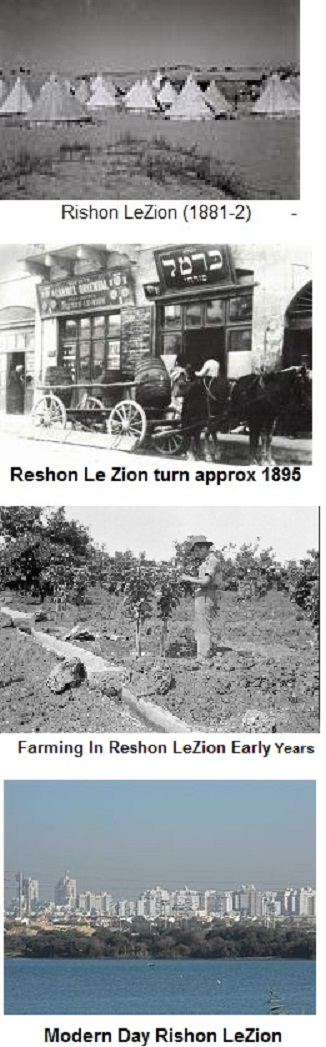
This repeated itself in many Jewish areas in Palestine both during the Ottoman rule and the later British mandate. It must be remembered that at that time there existed not one Arab country – there were no borders till after WWI. Droves of Arabs arrived from all over the Middle East, Persian Gulf, and Africa. Muslims of other ethnicities arrived from Africa and even Europe (to become part of the Arab group “described” today as “Palestinians”).
Of course Arabs also came from eastern Palestine - what later became Jordan when the British partitioned Palestine in the early 1920’s. They continued to this "in-migration" from eastern Palestine until the '48 war (those that went back to eastern Palestine during the war now refer to themselves as refugees and are so recognized the UN).
Wednesday, February 3, 2016

The Myth of "Occupation"
published by Yosef Rabin on Jan 09, 2016
Even in UN General Assembly Resolution 181, the terms "Palestinian State" or "Palestinians" does not appear a single time
1. The Jewish communities of Judea-Samaria and Eastern Jerusalem* are not located in an “occupied territory.” The last binding international legal instrument which divided the territory of Israel, Judea-Samaria and Eastern Jerusalem*was the League of Nations Mandate, which explicitly recognized the
Tuesday, January 26, 2016
Monday, January 25, 2016
The Legal Basis of Israel’s Rights in the Disputed Territories
by Amb. Alan Baker
1. Upon Israel’s taking control of the area in 1967, the 1907 Hague Rules on Land Warfare and the Fourth Geneva Convention (1949) were not considered applicable to the West Bank (Judea and Samaria) territory, as the Kingdom of Jordan, prior to 1967, was never the prior legal sovereign, and in any event has since renounced any claim to sovereign rights via a vis the territory.
Football Match Between Australia & Palestine - OOPS! No Kafiyas
Before the re-establishment of Israel in 1948, the Palestinians were Jews, as they had been for 2000 years.
The Arabs were... Arabs. Watch this short clip. Listen to the commentator.
The Arabs were... Arabs. Watch this short clip. Listen to the commentator.
Is Jordan Palestine? by Daniel Pipes and Adam Garfinkle
Excerpts 1988 Article, Middle East Forum
. . ."nobody ever considered the two sides of the Jordan River anything but integral parts of a single land called Palestine." Many American supporters of Israel accept the Jordan-is-Palestine argument. Joan Peters premises her study, From Time Immemorial, on this notion. She routinely calls Israel a "corner of Palestine" and "Western Palestine," while "Eastern Palestine" is her term for Jordan. George F. Will states that "Jordan is Palestine-historically, geographically, ethnically."
A substantial body of opinion has developed in Israel and elsewhere which favors the snappy argument that Jordan is Palestine. Although closely associated with Ariel Sharon, the enfant terrible
. . ."nobody ever considered the two sides of the Jordan River anything but integral parts of a single land called Palestine." Many American supporters of Israel accept the Jordan-is-Palestine argument. Joan Peters premises her study, From Time Immemorial, on this notion. She routinely calls Israel a "corner of Palestine" and "Western Palestine," while "Eastern Palestine" is her term for Jordan. George F. Will states that "Jordan is Palestine-historically, geographically, ethnically."
A substantial body of opinion has developed in Israel and elsewhere which favors the snappy argument that Jordan is Palestine. Although closely associated with Ariel Sharon, the enfant terrible
Sunday, January 24, 2016
Saturday, January 23, 2016
Arabs Have a Right to Live Anywhere - Jews Do Not!
How is it that Arabs have a right to live anywhere they please, as they, of course, have internationally recognized civil rights. Jews, on the otherhand, do not have these rights. Jew are being required by the international community to grant the Arabs a Jew-free (Judenrein sound familiar) parcel of land as a starting point for negotiations for a resolution to the Arab-Israeli conflict.
Caroline Glick is a Columbia U Graduate, Harvard Graduate, Captain in IDF, Coordinator of Negotiations with the PLO, Foreign Policy Advisor for Israel, Deputy Managing Editor Jerusalem Post, Reporter for Israel's Channel 2 TV, Chicago Sun Times, Israel's Ma'ariv Newspaper, Correspondent with US Forces during liberation of Baghdad. Full bio
Caroline Glick is a Columbia U Graduate, Harvard Graduate, Captain in IDF, Coordinator of Negotiations with the PLO, Foreign Policy Advisor for Israel, Deputy Managing Editor Jerusalem Post, Reporter for Israel's Channel 2 TV, Chicago Sun Times, Israel's Ma'ariv Newspaper, Correspondent with US Forces during liberation of Baghdad. Full bio
Arab's Own Words Debunk The "Palestinian" Fairy Tale
Arabs have stated. . .
Zuhair Muhsin, military commander of the PLO and member of the PLO Executive Council after Six Day War:
“There are no differences between Jordanians, Palestinians, Syrians and Lebanese. We are all part of one nation. It is only for political reasons that we carefully underline our Palestinian identity… yes, the existence of a separate Palestinian identity serves only tactical purposes. The founding of a Palestinian state is a new tool in the continuing battle against Israel.”Representative of Saudi Arabia at the United Nations, 1956:
“It is common knowledge that Palestine is nothing but Southern Syria.”Tuesday, January 19, 2016
Jordan is Palestine - The Myth of "Occupation"
by Yosef Rabin on Jan 09, 2016
Even in UN General Assembly Resolution 181, the terms "Palestinian State" or "Palestinians" does not appear a single time.
1. The Jewish communities of Judea-Samaria and Eastern Jerusalem* are not located in an “occupied territory.” The last binding international legal instrument which divided the territory of Israel, Judea-Samaria and Eastern Jerusalem*was the League of Nations Mandate, which explicitly recognized the right of Jewish
Even in UN General Assembly Resolution 181, the terms "Palestinian State" or "Palestinians" does not appear a single time.
1. The Jewish communities of Judea-Samaria and Eastern Jerusalem* are not located in an “occupied territory.” The last binding international legal instrument which divided the territory of Israel, Judea-Samaria and Eastern Jerusalem*was the League of Nations Mandate, which explicitly recognized the right of Jewish
Sunday, January 17, 2016
The Arab Narrative At Work Within Israel
Today, after 38 years in Israel, I drive on the highway from Akko-Acco east towards the Sea of Galilee. Along the way are large advertisement billboards. I have no idea what they say or what they are selling. They are written in Arabic. Not one word in Hebrew. Central Galilee, main highway - in this year 2011.
Saturday, January 16, 2016
San Remo's Mandate: Israel's 'Magna Carta' By Chris Mitchell
Monday, April 25, 2011
"The U.N. General Assembly exceeded its authority, exceeded its jurisdiction. It did not have the power to divide the country,"
JERUSALEM, Israel - This year marks the 91st anniversary of the resolution that transformed the Middle East and laid the groundwork for the formation of the modern state of Israel.
On April 25, 1920, delegations from the Allied
nations that triumphed in World War I met in San Remo, Italy, to divide
the Middle Eastern lands they had conquered.
That historical meeting transformed the Middle East
because, for the first time in nearly 2,000 years, the world's nations
called for the establishment of a Jewish homeland in the land that was
then called Palestine.
That decision effectively answered a fundamental
issue that still plagues the Israeli-Palestinian peace talks today:
whether Israel is an occupying power or it has a rightful claim to the
land.
Dividing an Empire
In San Remo - England, France, Italy, and Japan,
with the United States as an observer, divided the Ottomam Empire empire
into three mandates: Iraq, Syria and Palestine.
Until its defeat in World War 1, the 400-year-old
empire had spread itself throughout the Middle East. Now, France would
oversee Syria, while Iraq and Palestine fell under Great Britain.
The resolution also included the Balfour
Declaration, written by England's Lord Balfour in 1917. The declaration
called for "the establishment in Palestine of a national home for the
Jewish people." One British diplomat, Lord Curzon, called it Israel's
"Magna Carta."
Arab's Lion-Share, Israel's Niche
"Chaim Weizman said, at the time, you can say that
the Israeli state was born on the 25th of April in San Remo because that
was the significance of it," Sandell said.
Howard Grief said the resolution, which was adopted by the League of Nations, established several important precedents.
In his book, The Legal Foundation and Borders of Israel under International Law,
Grief explains that the resolution gave the Jewish people exclusive
legal and political rights in Palestine. It also gave the Arabs the same
rights for the remainder of the Middle East.
"The Arabs got the lion's share….I mean they got Syria, which was subsequently divided between Syria and Lebanon," Grief said.
"They got all of Mesopotamia and all of Arabia. This
is what Balfour himself said. 'Why are you complaining? You are getting
all these lands and we're granting a niche - he called it a niche - to
the Jewish people who were going to get Palestine," he said.
Immutable Law
Grief also explained that the 1920 San Remo resolution supersedes later U.N. resolutions.
"There is a doctrine in international law," Grief
said. "Once you recognize a certain situation, the matter is executed.
You can't change it."
"The U.N. General Assembly exceeded its authority,
exceeded its jurisdiction. It did not have the power to divide the
country," he said.
Settling Contested 'Settlements'
But what about all those contested Israeli
"settlements" in Judea and Samaria (the West Bank) that many people -
including U.N. Secretary-general Ban Ki-moon - say are illegal?
"Settlements are covered in Article 6 of the mandate for Palestine," Eli Hertz, president of Myths and Facts, explained to conference participants.
"Again the legal international document of the
mandate for Palestine and [it] clearly says that not only [do] the Jews
have the right to settlement, but the world has the obligation to help
them to settle," Hertz explained.
This legal right of the Jews to build in Judea and
Samaria or in east Jerusalem neighborhoods is little understood in the
world today.
Sandell said he hopes to remedy that problem.
"We feel that we have an historical duty to just
bring the facts to the table," Sandell said. "Because we are here
dealing with historical facts and this should be known and this should
be taken into consideration in the public debate."
Watch expanded interviews with some of the
participants in this historic event commemorating the 90th anniversary
of the San Remo resolution:
- Tomas Sandell, the founding director of the European Coalition for Israel, helped organize the 90th anniversary event. ECI seeks to education European leaders "about the complex realities of the conflict in the Middle East by acknowledging the right for Israel, as the only democracy in the region, to exist within secure borders." Click here for more from Sandell.
- Eli Hertz is the president of Myths and Facts, a research organization focused much on the Middle East. Hertz has written a short pamphlet on this subject called "This Land is My Land: Mandate for Palestine, Legal Aspects of Jewish Rights," an excellent primer and succinct explanation of the legal foundation of the Jewish state.
Subscribe to:
Posts (Atom)